Norweco Singulair Green Wantage NJ: Energy Efficiency and Environmental Benefits
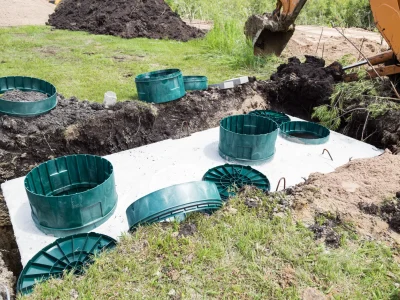
In Sussex County, wastewater treatment is not an abstract infrastructure topic. It is personal, practical, and often tied directly to the realities of rural living. In places like Wantage, where many properties rely on onsite treatment rather than a centralized sewer connection, the performance of a wastewater system affects more than convenience. It influences operating costs, groundwater quality, landscape use, and long term property value.
That is why conversations around the norweco singulair green Wantage NJ system tend to go well beyond brand recognition. Homeowners want to know whether it actually lowers energy use, whether it treats wastewater more effectively than a conventional septic setup, and whether the extra complexity pays off over time. Those are fair questions. The answer, in most cases, comes down to site conditions, maintenance discipline, and expectations. Still, there are clear reasons this type of treatment system has earned attention in areas where environmental sensitivity and lot limitations matter.
Why advanced treatment matters in Wantage
Wantage sits in a part of New Jersey where the relationship between homes, wells, soils, and groundwater deserves careful respect. Many rural lots have constraints that do not show up on a real estate listing. The soil may drain too quickly or too slowly. The seasonal high water table may narrow disposal options. A property may have limited room for a large drainfield, or it may sit near streams, wetlands, or neighboring wells that make standard solutions harder to approve.
A conventional septic system can work very well when the lot, soil, and usage patterns line up. But conventional systems are simple by design. Wastewater leaves the house, solids settle in a tank, and partially treated effluent flows to the disposal area. Much of the treatment burden is pushed into the soil. When the site is marginal, that arrangement can be less forgiving.
Advanced treatment units such as the Norweco Singulair Green are designed to do more treatment before effluent reaches the dispersal area. That matters in a township like Wantage, where preserving groundwater quality is not just an environmental talking point. It is part of everyday public health. Many households depend on private wells, and a poorly performing system can create consequences that are expensive and unpleasant to correct.
What the Singulair Green system is trying to do differently
At its core, the Singulair Green is an aerobic treatment system. Instead of relying mainly on passive settling and soil contact, it introduces an active biological process that encourages microorganisms to break down waste more thoroughly. The system uses aeration and clarification stages to improve the quality of the discharged effluent before it moves to the next part of the treatment train.
That active treatment approach changes the conversation in two important ways. First, it can improve effluent quality compared with basic septic tank discharge under the right conditions and when maintained properly. Second, it uses electricity to run equipment, which means the system has an energy profile that a conventional septic tank often does not.
For homeowners, this creates a trade off. You gain treatment performance and often more design flexibility, but you also take on a system that needs regular inspection, service, and dependable power. People sometimes focus only on the added maintenance, yet that misses the full picture. The energy question is not simply whether the unit uses electricity. The more useful question is whether it uses energy efficiently for the treatment value it delivers.
Looking at energy efficiency honestly
Any advanced onsite treatment unit with aeration equipment will consume power. There is no credible way to present that as zero. A standard septic tank, by contrast, may use little or no electricity on its own unless pumps are part of the layout. So if someone is comparing utility bills line by line, the advanced system starts with an apparent disadvantage.
The better comparison is broader. A well selected aerobic treatment unit can reduce strain on the drainfield, improve effluent quality, and in some cases make it possible to build or renovate on sites where a conventional setup would be impractical or require a much larger footprint. That can translate into avoided costs and avoided environmental damage, which are meaningful forms of efficiency even if they do not appear as a lower monthly electric bill.
In practice, energy use for systems like this is usually modest in household terms, though the exact amount varies by model, loading, service condition, and run time. It is reasonable for a homeowner to ask an installer or service provider for realistic operating estimates based on the specific design. What matters most is that the equipment runs as intended. An inefficiently operating aerator, neglected component, or failing timer can quietly push energy use upward while treatment quality slips at the same time.
That is one of the less glamorous truths of onsite treatment. Energy efficiency is not only about equipment selection. It is also about upkeep. A system that is technically efficient on paper can perform poorly if filters are ignored, alarms are not addressed, or service intervals are stretched too far.
norweco singulair green Wantage NJWhere the environmental benefits become tangible
The environmental advantages of a well maintained advanced treatment system show up in several concrete ways. The first is better pretreatment of wastewater before it enters the soil absorption area. When effluent carries lower concentrations of solids and organic matter, the disposal field generally has a better chance of lasting well and functioning as intended. That can reduce the risk of surfacing wastewater, saturated soils, and the kind of premature failure that turns a backyard into a repair project.
The second benefit is groundwater protection. In regions where households rely on private wells, this point deserves more attention than it usually gets. Better treated effluent lowers the burden on the receiving environment. No residential system eliminates all risk, but improved treatment upstream is a practical step toward reducing contamination concerns.
The third benefit is site adaptability. On some parcels, advanced treatment can support designs that use less area or work with more difficult conditions, subject to local approvals and engineering. That can preserve usable yard space and, more importantly, avoid forcing a compromised conventional layout onto a site that cannot support it comfortably.
There is also a less visible environmental gain related to lifecycle performance. When a drainfield fails early because too much untreated or poorly treated wastewater reaches it, the remedy often involves excavation, replacement materials, vehicle traffic, and disruption to soils and vegetation. A system that helps the disposal area last longer is not just saving money. It is preventing a secondary wave of environmental disturbance.
The local context in Sussex County
A wastewater system that looks good in a brochure may not be the right answer on a real lot in Wantage. Local topography, winter conditions, soil testing, setback requirements, and household water use all influence how a system performs. That is why the phrase norweco singulair green Wantage NJ should never be treated like a one size fits all recommendation. It is a category of solution that may fit certain site challenges and homeowner priorities, not a universal answer.
Cold weather is one local consideration that often gets oversimplified. Modern treatment units are commonly installed in climates with cold winters, but performance still depends on proper design, installation depth, usage consistency, and service support. A system on a year round occupied home behaves differently from one at a property that sits vacant for long periods. Occupancy patterns affect biological activity, and biological systems generally prefer steadier loading.
The age and plumbing habits of the household matter too. A retired couple that uses water conservatively creates a different loading pattern than a family of five with frequent laundry cycles, long showers, and weekend guests. Neither profile is automatically a problem, but proper sizing and realistic expectations matter.
What homeowners often misunderstand about efficiency
One common misunderstanding is that water efficiency and treatment efficiency are the same thing. They are related, but not identical. Low flow fixtures, efficient toilets, and smart laundry habits can reduce hydraulic loading on the system, which is helpful. But they do not replace treatment. A home can use less water and still send a challenging waste stream into the unit if grease, wipes, harsh chemicals, or excessive cleaners are entering the plumbing.
Another misunderstanding is that advanced treatment means maintenance free. It does not. In fact, it usually means the opposite. The payoff for better treatment is greater attention. Service contracts are common for a reason. Pumps, aerators, alarms, and internal components need inspection. Sludge still accumulates and must be managed. Homeowners who embrace that reality tend to have a far better experience than those who expect a set it and forget it appliance.
A third misconception is that more complexity always means more trouble. That is not necessarily true. A properly installed and serviced advanced unit can be reliable for many years. The key issue is not complexity by itself. It is whether the system matches the site and whether the owner is prepared for routine care. I have seen simple systems fail because they were installed on unsuitable ground, and more advanced systems perform very well because someone paid attention to service intervals and household habits.
Day to day operating habits that support both energy savings and treatment quality
Most homeowners cannot change the engineering once the system is in the ground, but they do have a strong influence on operating efficiency. Small habits add up. Spreading out laundry loads instead of doing everything in one afternoon creates a steadier flow. Fixing leaking toilets prevents constant hydraulic loading that serves no useful purpose. Avoiding garbage disposal overuse reduces solids and grease entering the treatment process.
The same is true for power reliability. Because an aerobic system depends on active components, ignoring alarms or shutting power off casually can disrupt treatment. In storm prone areas, homeowners sometimes ask whether backup power is worth considering. The answer depends on outage frequency, occupancy, and system design, but it is a reasonable discussion to have, especially for full time residences where prolonged interruptions are common.
Here are a few habits that tend to protect both performance and efficiency:
- Address plumbing leaks quickly, especially running toilets.
- Space out high water use activities over the week when possible.
- Keep wipes, grease, solvents, and strong disinfectants out of the system.
- Respond to alarms promptly rather than waiting for the next service visit.
- Maintain the recommended inspection and pumping schedule.
Those steps are simple, but they are not trivial. A surprisingly large share of septic and treatment problems begins indoors, long before anything is visible outside.
The cost question, beyond the purchase price
When homeowners compare systems, the first number they usually focus on is installation cost. That is understandable, but it can distort the decision. The more useful comparison looks at total ownership over many years, including electricity, service visits, pumping, component replacement, and the risk of drainfield problems.
An advanced treatment unit typically costs more up front than a basic septic tank system. It also usually carries ongoing service costs that a passive system may not. That is the honest side of the ledger. But the opposite side matters too. If advanced treatment allows a buildable design on a difficult lot, protects a replacement area, or helps avoid premature field failure, the economics can shift in its favor.
The best homeowners ask not only, “What does this system cost?” but also, “What problem is this system solving on my property?” If the answer is “none,” then a simpler option may be better. If the answer is “it makes a challenging site workable and lowers environmental risk,” then the higher ownership cost may be well justified.
Installation quality often matters more than marketing claims
No wastewater technology can outperform a poor installation. This point is worth stating plainly because brochures tend to make every system sound foolproof. Tank elevation, watertight connections, proper venting, control setup, alarm placement, and the relationship between the treatment unit and final dispersal area all affect results. So does the quality of the site evaluation before any equipment arrives.
In areas like Wantage, local permitting and engineering standards are not procedural annoyances. They are part of quality control. A competent designer or installer should be able to explain why a particular treatment approach fits the lot, what maintenance it will require, and what signs of trouble a homeowner should watch for. Vague reassurance is not enough. Good professionals talk in specifics.
If a homeowner is evaluating the norweco singulair green Wantage NJ option, one of the smartest moves is to discuss the proposed system with both the installer and the service provider. Sometimes those are different companies. The installer focuses on getting the system in the ground and approved. The service technician sees how these systems behave over time, which can reveal practical issues that do not show up during installation.
Maintenance is part of the environmental benefit
There is a temptation to talk about environmental benefits as if they are fixed properties of the equipment itself. In reality, they are conditional. A neglected advanced treatment unit can lose much of the advantage it was supposed to deliver. That may sound obvious, but it is often ignored in sales discussions.
Routine maintenance protects the environment in a very direct way. It helps the biological process remain stable, keeps moving parts functioning efficiently, and allows problems to be caught before they become discharge or drainfield issues. A clogged component or underperforming aerator does not merely threaten the owner’s investment. It can degrade the quality of the effluent reaching the soil.
A good service record also helps future property transactions. Buyers are understandably cautious about onsite wastewater systems, especially advanced ones. Documentation that shows regular inspections, pumping, and component care can reassure them that the system has not been left to chance.
Is it the right fit for every property in Wantage?
No. That is probably the most important practical point in the entire discussion. There are properties where a conventional system remains the simpler and more sensible choice. There are others where an advanced treatment unit is the only realistic path to a code compliant, environmentally responsible design. And there are edge cases where either could work, but the homeowner’s tolerance for maintenance should drive the decision.
The strongest case for a system like this usually appears when the site presents limitations, when improved effluent quality is a priority, or when protecting a constrained disposal area matters. The weaker case appears when a property has excellent soils, ample room, and an owner who is unlikely to keep up with service obligations. Technology should solve a real problem. If it does not, it can become an unnecessary complication.
A grounded view of the norweco singulair green Wantage NJ option
For homeowners in Wantage, the value of the norweco singulair green Wantage NJ approach lies in the balance it offers. It is not the lowest maintenance route, and it is not the cheapest to own in simple utility terms. What it can offer is stronger wastewater treatment, a measure of protection for sensitive site conditions, and the potential to reduce stress on the disposal field when properly designed and maintained.
That combination has real environmental significance in a community where private wells, variable soils, and rural lot conditions shape everyday decisions. Energy efficiency, in this context, should be understood as responsible use of power to achieve a higher level of treatment and potentially avoid larger environmental and financial costs later. It is a more mature definition of efficiency than a narrow glance at the electric meter.
Homeowners who do best with systems like this usually approach them with clear eyes. They ask hard questions. They expect maintenance. They choose qualified local professionals. And they understand that a wastewater system is not hidden magic under the lawn. It is a working piece of infrastructure, one that rewards attention and punishes neglect.
For the right property, that attention pays off in cleaner effluent, a healthier drainfield, and a more protective approach to onsite wastewater treatment. In a place like Wantage, that is not just a technical advantage. It is a practical one.
Excavating New Jersey LLC
406 County Rd 565
Wantage, NJ 07461, United States
Phone: +1 (973) 791-4284
FAQ About norweco singulair green Wantage NJ
How does a Norweco septic system work?
Singulair Green uses aerobic biological treatment in a polyethylene tank, followed by settling and filtration. The treatment unit is one part of a complete wastewater system; the site design also determines how treated effluent is dispersed.
How much does a Norweco septic system cost in NJ?
A useful estimate requires a property evaluation. Excavation access, soil conditions, engineering, electrical work, the disposal field, and restoration can affect the total. Ask Excavating New Jersey LLC for a written scope that distinguishes installation costs from ongoing service costs.
Are Norweco septic systems good?
Singulair Green is an established aerobic treatment option, but suitability depends on the property and proposed design. Compare the model's documented performance, maintenance needs, and total project scope with alternatives before deciding.